
Guide
The Sunnyvale office cleaning checklist, room by room
When you sign off on an office cleaning plan, you should be able to walk into any room on your floor and know what finished looks like there. Here is how a recurring visit breaks down from the front door to the back kitchen, and which jobs come around on a slower cycle.
Printable checklist
What does office cleaning include?
Office cleaning includes the work every room needs on each visit: emptying bins and recycling, wiping desks and touch points, resetting kitchens and restrooms, restocking dispensers and vacuuming or mopping floors. Detail work such as interior glass, baseboards, high dusting and carpet extraction runs on a slower rotation.
That split between nightly and periodic tasks keeps each visit focused and the price predictable. The sections below go room by room, starting at the front door. If you are comparing janitorial services in Sunnyvale, use this list to check that every quote covers the same rooms.
Entry and reception
Reception is the room clients and candidates see first, so it leads the list. Each visit covers the entry floor, the front desk surface, door handles and push plates, and the interior glass at the entrance where fingerprints build up. Seating gets dusted and wiped, and the bins by the door are emptied.
If your lobby has a stainless steel elevator front or a glass partition, point it out during the walkthrough. Those surfaces show smudges fast and earn a place on the visit list rather than waiting for a periodic detail.
Workstations and private offices
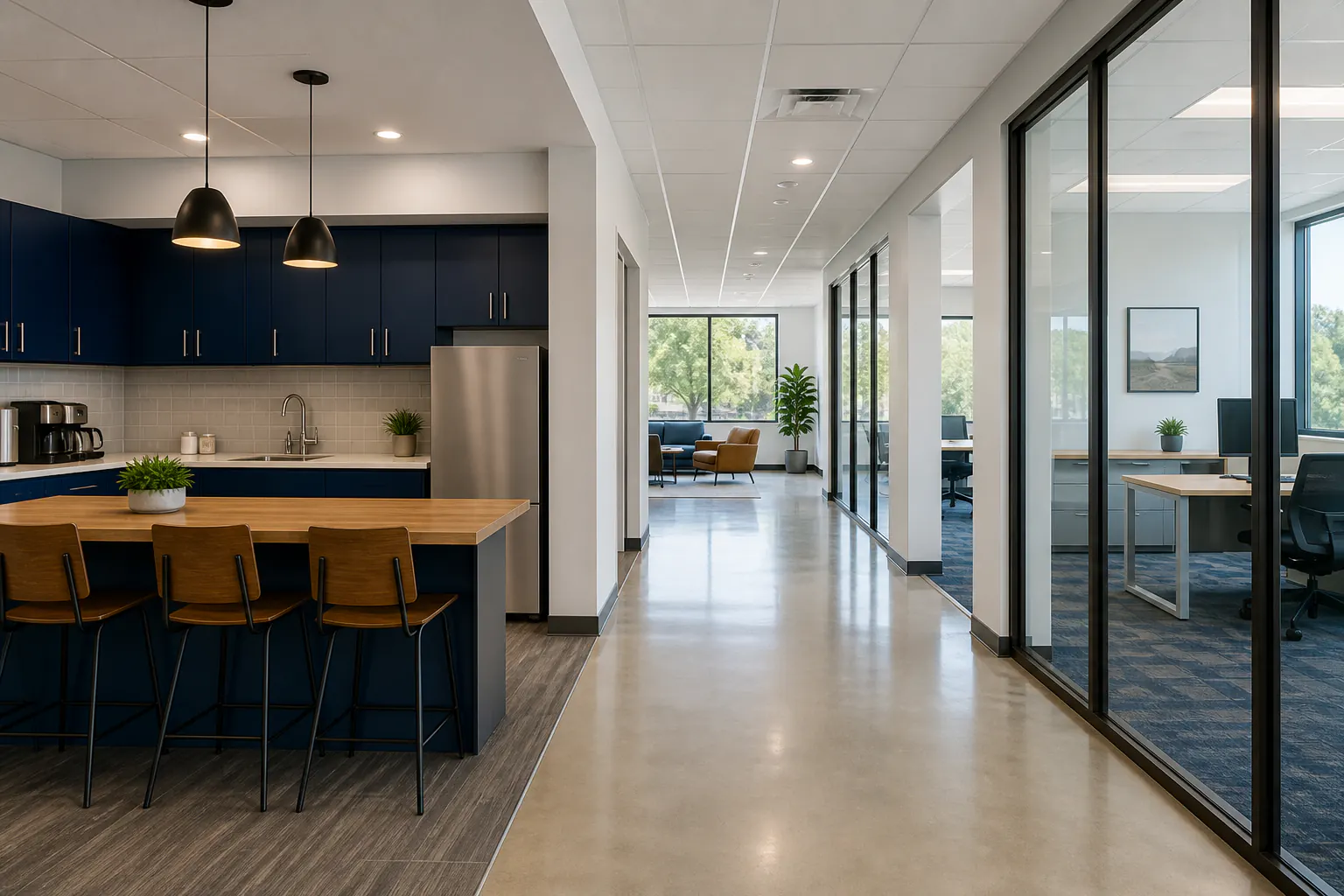
Open work areas get the shared touch points: clear desk surfaces, hot desks, chair arms, light switches and door handles. Bins and recycling are emptied, and floors are vacuumed or mopped around the desks and along the walkways where wear shows first.
Personal desks are a call your team makes once, not one the crew makes every night. Some offices want every clear surface wiped; others want papers and monitors left alone. Private offices follow the same idea, with a full pass, floors and bins, or bins only. Write the choice onto the printable checklist above so it holds from the first visit.
Restricted rooms such as server closets, R&D labs or HR files get their own line on the plan, with the entry steps spelled out next to each one.
Meeting rooms, kitchens and breakrooms
Meeting rooms are cleaned for the next booking: tables wiped, chairs pushed in, whiteboard ledges and remotes dusted, glass walls spot cleaned and floors finished. In a tech office where rooms are booked back to back, this is the space people notice first when something gets missed.
The kitchen is the hardest-working room on most floors. Every visit resets counters and sinks, wipes appliance fronts and the handles on the fridge, microwave and coffee machine, empties waste and recycling, and cleans the floor. The inside of the fridge and the microwave work better as scheduled tasks, set for the day your team clears out leftovers.
If the kitchen looks rough by mid-afternoon on full days, that points to a daytime porter for the lunch rush rather than more evening visits. Our guide to porter coverage versus the nightly clean shows how a building splits that work without paying twice.
Restrooms
Restrooms are part of every single visit. Fixtures, sinks, counters, mirrors, stall touch points and floors are cleaned, and the crew tops up paper, soap and liners on every visit, from supplies we bring or your own stock. Tell the crew where supplies are stored and who on your side reorders them, so an empty dispenser never turns into a mystery.
On floors that fill up on the same few days, the restrooms closest to the large meeting rooms take the heaviest use. Those are the ones to weight on in-office days, with extra checks when the whole team is in.
Floors and the periodic list
Not every task happens every visit. Vacuuming, mopping and spot cleaning are routine. Carpet extraction for the walkways around desks, periodic hard floor work, wall spot cleaning, high dusting, stainless steel detailing and interior window work run on their own cycle, booked into an evening or weekend so the floor is clear.
A rotating detail list keeps the routine visit focused while the slower jobs still get done: interior glass one night, baseboards another, vents and high ledges later in the week. Your recurring janitorial plan shows which tasks repeat every visit and which rotate.
Larger one-off jobs, like a deep clean before move-in or after a renovation, are booked as one-time commercial cleaning so they never push the routine aside.
A few useful answers
Quick answers.
What counts as extra beyond the routine office clean?
Carpet extraction, floor stripping and refinishing, interior window detail and a one-time deep clean before a move-in are booked as their own jobs. They join the same plan and sit on separate quote lines.
What does a standard office cleaning visit cover?
Every room on your checklist: entry, work areas, meeting rooms, kitchens, restrooms, waste and floors. Detail tasks such as glass, baseboards and vents rotate through the week.
Who decides whether personal desks get wiped?
Shared and clear desks are wiped. Personal desks follow the instruction your team sets, from a full wipe to hands off.
How often is carpet extraction scheduled?
It runs on its own cycle, based on how fast walkways show wear. Routine visits vacuum and spot clean, and extraction is set for an evening or weekend when the floor is clear.
What helps the first walkthrough go quickly?
Bring a floor plan or room list, your in-office days and a note on any restricted rooms. With those in hand, the walkthrough turns into a room-by-room checklist fast.
Industries
Related industries
Services